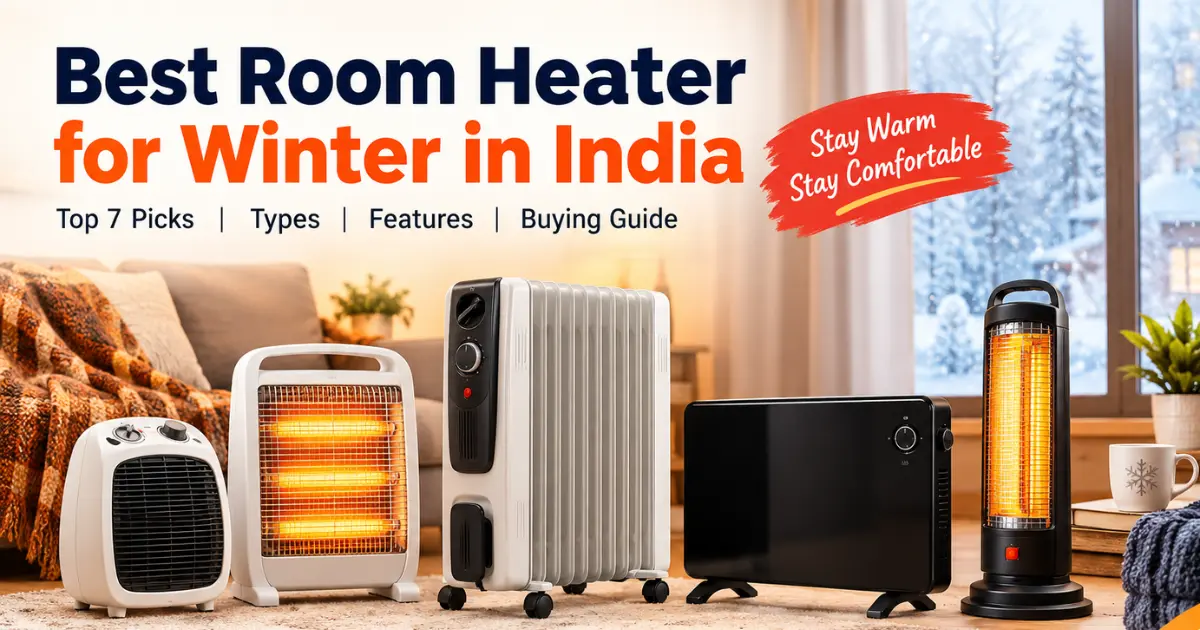
7 Best Room Heater for Winter in India: Top Picks, Types, Features & Buying Guide
Posted on |
Winter in India can be extremely cold, especially in North India, where temperatures drop significantly during December and January. A good room heater can make your bedroom, living room, or office more comfortable during chilly mornings and nights.
However, choosing the right heater is not always easy. There are several options available, including fan heaters, oil-filled radiators, quartz heaters, halogen heaters, and ceramic heaters. Each type offers different heating performance, power consumption, safety features, and price ranges.
If you are searching for the Best Room Heater for Winter in India, this guide will help you compare different types, understand their features, and choose the right heater according to your room size and budget.
We will also cover electricity consumption, important safety features, and frequently asked questions to help you make an informed buying decision.

Quick Answer: Which Is the Best Room Heater for Winter in India?
The best room heater depends on your room size, budget, and heating requirements.
- Best for small rooms: Quartz or halogen room heater.
- Best for quick heating: Fan or blower room heater.
- Best for bedrooms: Oil-filled radiator (OFR).
- Best for large rooms: Oil-filled radiator with multiple heat settings.
- Best for budget buyers: Fan room heater.
- Best for quiet operation: Oil-filled radiator.
For most households, a fan heater is a practical budget-friendly option, while an oil-filled radiator is worth considering for longer heating sessions in bedrooms and larger spaces.
7 Best Types of Room Heaters for Winter in India
Here are seven popular types of room heaters worth considering for Indian winters.
1. Oil-Filled Radiator (OFR) Room Heater – Best for Bedrooms
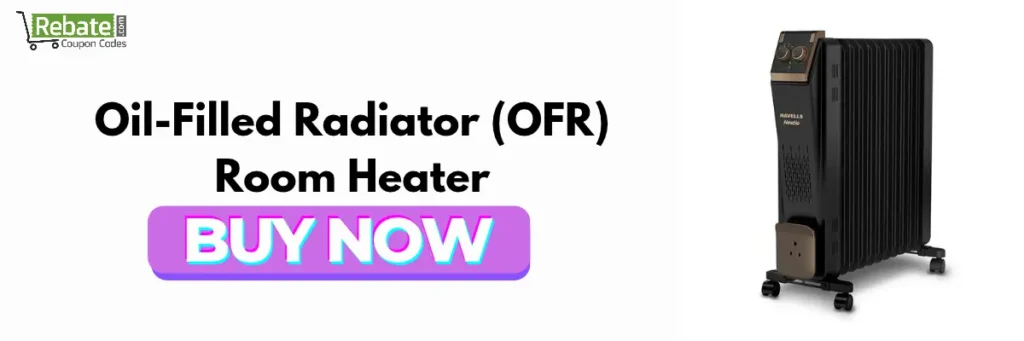
An oil-filled radiator is one of the most popular choices for people who need consistent warmth during winter. It uses electrically heated oil inside sealed radiator fins to distribute heat throughout the room.
Unlike conventional fan heaters, most oil-filled radiators operate without continuously blowing hot air.
Key Features:
- Provides gradual and consistent heating.
- Generally operates quietly.
- No exposed glowing heating element.
- Suitable for longer heating sessions.
- Available with adjustable thermostats and multiple heat settings.
Pros:
- Quiet operation.
- Comfortable, sustained heating.
- No fan noise or continuous airflow.
Cons:
- Higher purchase price.
- Takes longer to warm a room.
- Larger and heavier than portable fan heaters.
Best For: Bedrooms, larger rooms, and households that need longer periods of heating.
2. Fan Room Heater – Best for Quick Heating
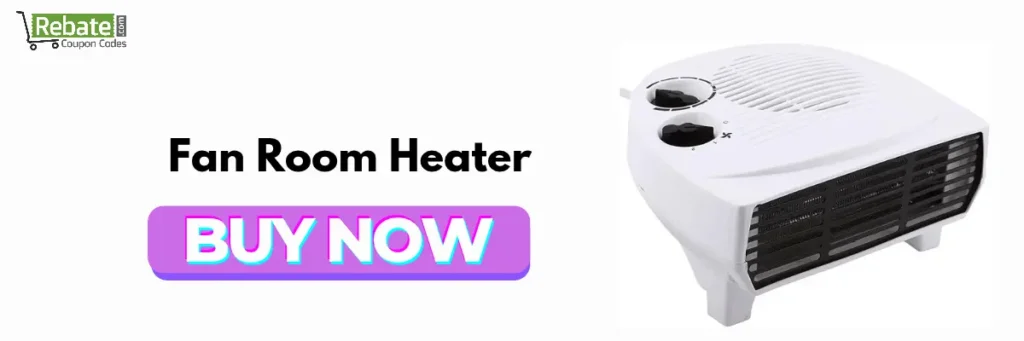
A fan room heater uses an electric heating element and a fan to circulate warm air around the room. It is generally affordable, compact, and easy to move.
Many models offer two heating settings, such as 1000W and 2000W, allowing users to adjust the heating power.
Key Features:
- Fast warm-air circulation.
- Compact and portable design.
- Budget-friendly options.
- Multiple heat settings in selected models.
Pros:
- Affordable.
- Heats nearby spaces quickly.
- Easy to carry between rooms.
Cons:
- Produces fan noise.
- Can make the air feel dry.
- Not ideal for very large rooms.
Best For: Small bedrooms, study rooms, and offices.
3. Quartz Room Heater – Best Budget Option
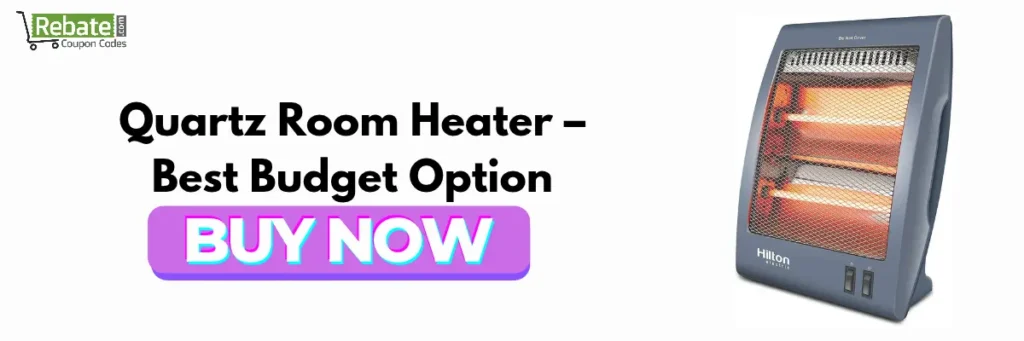
Quartz heaters use electrically heated quartz tubes to produce radiant heat. They provide warmth directly to people and objects in front of the heater rather than heating the entire room evenly.
These heaters are generally inexpensive and suitable for personal heating.
Key Features:
- Radiant heating technology.
- Lightweight and portable.
- Simple operation.
- Often available with two heating rods.
Pros:
- Low initial cost.
- Provides quick directional warmth.
- Suitable for personal use.
Cons:
- Limited heating coverage.
- Exposed hot elements can cause burns.
- Requires extra care around children and pets.
Best For: Small spaces and personal heating near a desk or chair.
4. Halogen Room Heater – Best for Instant Radiant Heat
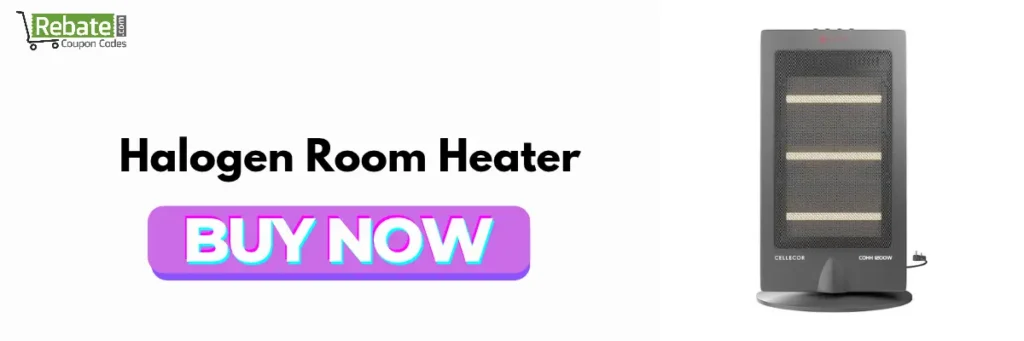
Halogen room heaters use halogen heating tubes to produce radiant warmth. They start providing heat quickly and are available in compact designs.
Some models also include oscillation to distribute warmth across a wider area.
Key Features:
- Instant radiant heating.
- Lightweight construction.
- Multiple heating settings.
- Oscillation in selected models.
Pros:
- Quick heating.
- Easy to operate.
- Affordable options available.
Cons:
- Mostly heats objects and people directly in front.
- Glowing elements need careful handling.
- Not suitable for unattended operation.
Best For: Personal heating and small rooms.
5. Ceramic PTC Room Heater – Best for Modern Heating
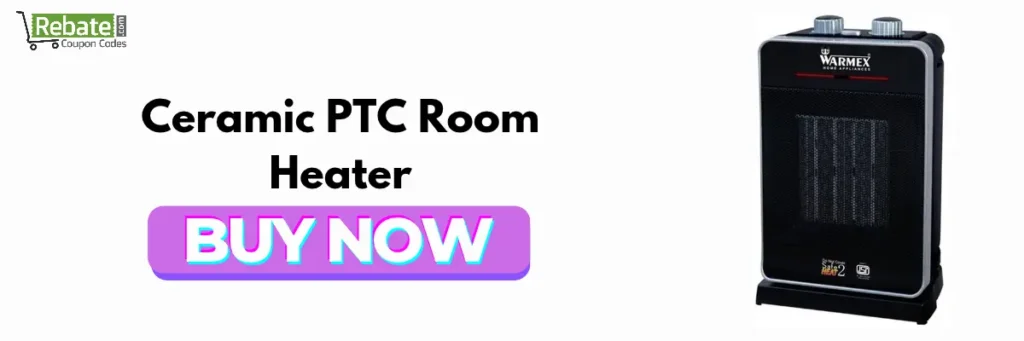
Ceramic PTC heaters use Positive Temperature Coefficient ceramic heating elements. Many models combine this technology with a fan to distribute warm air.
PTC technology helps regulate the heating element’s temperature, although the complete heater still needs proper safety protections.
Key Features:
- Ceramic heating element.
- Compact design.
- Quick warm-air circulation.
- Some models offer adjustable thermostats and safety cut-offs.
Pros:
- Compact and convenient.
- Quick heating.
- Useful for personal and small-room heating.
Cons:
- Fan models produce some noise.
- Performance depends on room size and insulation.
- Usually cost more than basic fan heaters.
Best For: Small bedrooms, home offices, and personal heating.
6. Convector Room Heater – Best for Medium-Sized Rooms
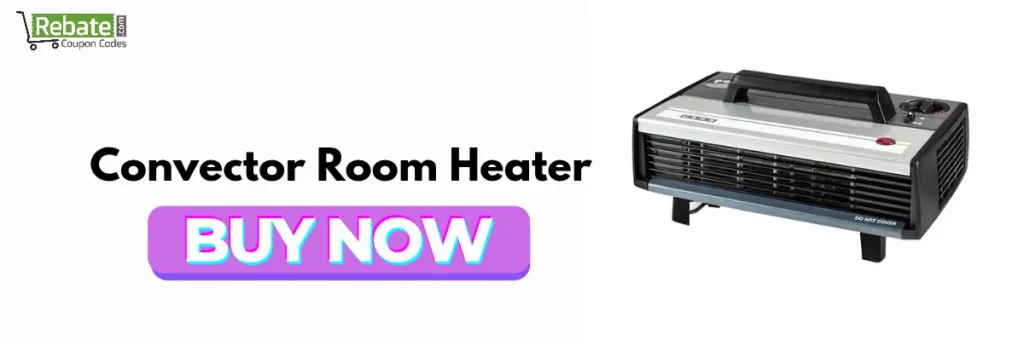
A convector heater warms air that circulates naturally through the room. Some models also include a fan to speed up heat distribution.
These heaters are useful when you want more general room heating instead of only direct radiant warmth.
Key Features:
- Convection-based heating.
- Available in different wattage options.
- Some models include adjustable thermostats.
- Suitable for medium-sized spaces when correctly sized.
Pros:
- Provides more distributed warmth.
- Available in affordable and mid-range options.
- Some models operate quietly without a fan.
Cons:
- Can take time to warm the room.
- High-wattage models consume considerable electricity.
- External surfaces may become hot.
Best For: Medium-sized bedrooms and living rooms.
7. Carbon Room Heater – Best for Personal Heating
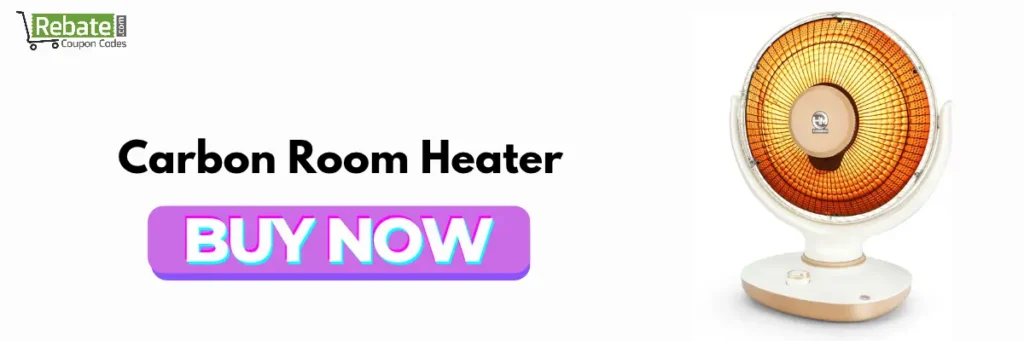
Carbon heaters use carbon-fibre heating elements to produce radiant heat. They are designed to provide direct warmth and are available in different power configurations.
Key Features:
- Radiant heating.
- Compact designs.
- Quick personal heating.
- Available with multiple heat settings.
Pros:
- Provides direct warmth.
- Portable design.
- Useful for personal heating.
Cons:
- Limited whole-room heating.
- Heating elements require protection.
- Safety depends on the product’s construction and protective features.
Best For: Small rooms and personal heating.
Comparison of the Best Room Heater Types in India
| Heater Type | Heating Speed | Best Use | Budget |
| Oil-Filled Radiator | Gradual | Bedrooms and large rooms | Premium |
| Fan Heater | Fast | Small rooms | Budget |
| Quartz Heater | Instant direct heat | Personal heating | Budget |
| Halogen Heater | Instant direct heat | Small spaces | Budget to mid-range |
| Ceramic PTC Heater | Fast | Small bedrooms | Mid-range |
| Convector Heater | Gradual | Medium rooms | Budget to mid-range |
| Carbon Heater | Fast direct heat | Personal heating | Budget to mid-range |
Prices and performance vary by model, wattage, brand, and retailer.

How to Choose the Best Room Heater for Your Home?
Before purchasing a room heater, consider these important factors.
1. Check Your Room Size
Room size is one of the most important factors when selecting a heater.
A small heater may not provide enough warmth in a large room, while an unnecessarily powerful heater can increase electricity consumption.
As a rough starting point, around 10 watts per square foot can help estimate the required heating capacity. Actual requirements depend on insulation, ceiling height, outdoor temperature, and window gaps.
2. Check the Wattage
Wattage indicates how much electrical power a heater uses at its rated setting.
Common options include:
- 400W–800W: Small personal heating.
- 1000W–1200W: Small spaces and lower heating requirements.
- 1500W–2000W: Many small to medium rooms.
- 2400W–2900W: Larger oil-filled radiator models.
Always check the manufacturer’s recommended room coverage.
3. Look for Essential Safety Features
Safety should be a priority when buying an electric room heater.
Look for:
- Overheat protection.
- Tip-over protection.
- Automatic thermal cut-off.
- Protective safety grill.
- Stable base.
- ISI/BIS compliance where applicable.
These features can reduce common risks, but they do not eliminate the need for careful use.
4. Check the Thermostat and Heat Settings
A thermostat helps maintain a comfortable temperature by controlling the heater’s operation.
Multiple heat settings allow you to adjust power according to the weather and your comfort requirements.
5. Consider Noise Levels
If you plan to use a heater in your bedroom, noise can be an important consideration.
Oil-filled radiators generally operate quietly, while fan heaters produce airflow noise.
6. Check Warranty and Brand Support
Choose a product from a manufacturer that provides clear warranty terms and accessible customer support.
Also check the availability of service centres and replacement parts.
How Much Electricity Does a Room Heater Consume?
Electricity consumption depends on the heater’s wattage and the number of hours it operates.
You can calculate consumption using this formula:
Electricity Consumption (Units) = Wattage × Hours Used ÷ 1000
For example, a 2000W room heater running for 5 hours consumes:
2000 × 5 ÷ 1000 = 10 units.
If your electricity tariff is ₹8 per unit, the estimated cost is:
10 × ₹8 = ₹80 per day.
Here is an approximate electricity consumption table:
| Heater Wattage | 1 Hour | 5 Hours |
| 800W | 0.8 units | 4 units |
| 1000W | 1 unit | 5 units |
| 1500W | 1.5 units | 7.5 units |
| 2000W | 2 units | 10 units |
| 2500W | 2.5 units | 12.5 units |
Actual consumption may be lower when a thermostat cycles the heater off, but it depends on operating conditions and the selected heat setting.
Important: Oil-filled radiators are not automatically cheaper to operate than fan heaters. Electricity use primarily depends on the power drawn and operating time.

Important Safety Tips for Using a Room Heater
Follow these precautions to use your room heater safely during winter.
- Keep the heater away from curtains, blankets, clothes, and other flammable materials.
- Place it on a stable, flat, and dry surface.
- Avoid covering the heater while it is operating.
- Keep children and pets away from hot surfaces and heating elements.
- Use a properly rated wall socket and avoid cheap extension boards.
- Never touch the heater with wet hands.
- Switch off and unplug the heater when it is not in use.
- Do not leave a portable heater unattended.
- Follow the manufacturer’s instructions for ventilation and safe operation.
- Stop using the heater if the plug, cable, or socket becomes unusually hot.
For additional safety, check the applicable BIS standard and certification details before purchasing.
Which Room Heater Is Best for Different Needs?
Here is a quick recommendation based on common household requirements:
| Your Requirement | Recommended Heater |
| Small bedroom | Fan or ceramic PTC |
| Large bedroom | Oil-filled radiator |
| Study table | Quartz heater |
| Quick heating | Fan heater |
| Quiet operation | Oil-filled radiator |
| Budget-friendly heating | Quartz or fan heater |
| Medium-sized living room | Convector or appropriately sized OFR |
| Personal heating | Halogen or carbon heater |
Final Verdict: Which Is the Best Room Heater for Winter in India?
Choosing the Best Room Heater for Winter in India depends on your budget, room size, and daily heating requirements.
If you need an affordable heater for occasional use, a fan heater or quartz heater can be a practical option. For bedrooms and longer heating sessions, an oil-filled radiator is worth considering because it provides consistent warmth with quiet operation.
Ceramic PTC heaters and convector heaters are also useful alternatives depending on your requirements.
Before buying, compare wattage, safety features, warranty, room coverage, and electricity consumption. Most importantly, choose a heater that matches your space rather than purchasing one simply because it has a higher wattage.
A suitable room heater can make your winter more comfortable while helping you manage your electricity usage responsibly.
Frequently Asked Questions (FAQs)
An oil-filled radiator is a good choice for bedrooms and longer heating sessions. Fan heaters are suitable for quick heating and budget-conscious buyers, while quartz heaters are useful for personal heating.
A heater with lower wattage generally consumes fewer electricity units per hour. However, the actual consumption depends on operating time, heat settings, thermostat operation, and room conditions.
An oil-filled radiator offers quieter and more consistent heating, making it suitable for bedrooms and longer use. A fan heater heats nearby spaces quickly and is usually more affordable.
A fan heater or ceramic PTC heater can be suitable for a small bedroom. A quartz heater is another option if you only need warmth near your seating area.
It is better not to leave a portable room heater running unattended while sleeping. Always follow the manufacturer’s instructions, use appropriate safety features, maintain clear space around the heater, and switch it off when not required.